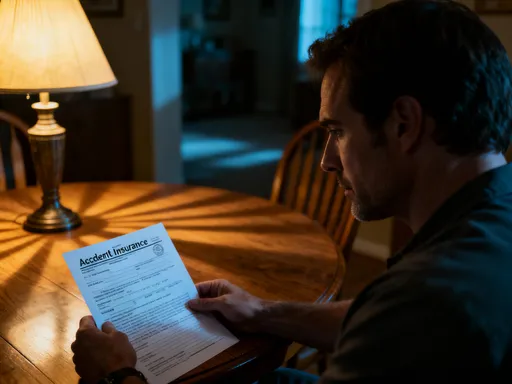
How I Locked Down My Future Without Losing a Dime
What if one wrong step could wipe out years of hard-earned savings? I used to think accidents only happened to others—until I saw how fast life can change. That’s when I realized protecting my assets wasn’t about earning more, but guarding what I already had. This is how I built a safety net with accident insurance, not as a backup plan, but as a core part of my financial strategy—simple, smart, and shockingly effective. It didn’t require a high salary or risky investments. Instead, it started with a shift in mindset: before chasing growth, I needed to protect what I already owned. That decision changed everything.
The Wake-Up Call: When Life Hit Reset
It started with a fall—a moment so brief, it barely registered at the time. My sister slipped on a wet kitchen floor and fractured her wrist. No emergency room drama, no overnight hospital stay. Just a cast, a few follow-up visits, and weeks of limited mobility. On paper, it seemed minor. But behind the scenes, the financial ripple effects were anything but small. She missed nearly a month of work as a freelance graphic designer, losing income that wasn’t covered by her health plan. Her husband had to take unpaid time off to help with their two young children. The family’s carefully planned vacation fund was redirected to cover transportation to therapy sessions and a temporary home aide. Over time, what began as a simple injury quietly chipped away at their savings, retirement contributions, and even their long-term confidence in financial stability.
Watching this unfold was a turning point. I realized that financial security isn’t just about how much you earn or invest—it’s about how well you’re protected when life interrupts. Accidents like slips, falls, burns, or car crashes don’t discriminate. They happen in homes, schools, and workplaces every day. And while health insurance may cover medical bills, it rarely addresses lost wages, travel costs for treatment, or the everyday expenses that pile up when someone can’t function normally. The emotional toll was visible, but the financial toll was deeper. Their emergency fund, built over years, was nearly drained in months. This wasn’t a worst-case scenario—it was an average one. And if it could happen to them, it could happen to anyone, including me.
That realization sparked a change. I began to see that true financial planning doesn’t start with stocks or savings accounts. It starts with asking: What could go wrong? And more importantly, what happens if it does? I wasn’t willing to wait for a crisis to find out. So I looked for a solution that didn’t depend on luck or timing—a tool that would act as a buffer, not just a bandage. That’s when I discovered accident insurance, not as an add-on, but as a foundational piece of a smarter financial plan.
Accident Insurance Demystified: What It Really Is (And Isn’t)
Many people confuse accident insurance with health insurance or disability coverage, but they serve very different purposes. Health insurance pays for medical treatment—doctor visits, surgeries, medications. Disability insurance replaces a portion of your income if you’re unable to work due to illness or injury. Accident insurance, however, is more targeted. It provides a lump-sum cash benefit when you experience a covered accident, such as a broken bone, laceration, burn, or dislocation. The payout is fixed, based on the type and severity of the injury, and it goes directly to you—no restrictions on how you use it.
This distinction is critical. Accident insurance doesn’t replace medical care. It complements it. Think of it as financial first aid. If you break your leg, your health plan may cover the X-ray and cast, but it won’t pay for the Uber rides to physical therapy, the groceries delivered because you can’t shop, or the lost income if you’re self-employed and can’t take calls from bed. That’s where accident insurance steps in. The money you receive can be used to cover any of these indirect costs, preserving your savings and preventing you from dipping into retirement funds or maxing out credit cards.
Another common misconception is that accident insurance is only for high-risk jobs or extreme sports enthusiasts. In reality, most claims come from everyday situations—slipping in the shower, tripping on stairs, or getting injured while cooking. According to data from major insurers, household accidents account for a significant portion of claims, especially among adults aged 30 to 55, a group often balancing careers, parenting, and home responsibilities. The odds are not remote. The National Safety Council reports that unintentional injuries are a leading cause of lost workdays and medical visits in the United States, affecting millions each year. Yet, many families remain unprepared for the financial fallout.
Understanding what accident insurance is not is just as important. It doesn’t cover illnesses like heart attacks or strokes unless they result directly from an accident. It doesn’t pay out for chronic conditions or mental health episodes. And it won’t replace comprehensive disability coverage for long-term income protection. But what it does offer is immediate, flexible financial support when an unexpected physical injury disrupts your routine. It’s not about curing the injury—it’s about stabilizing your finances so you can focus on healing.
Why Asset Protection Starts Before You Invest a Dollar
Most financial advice focuses on growth: invest early, save consistently, take advantage of compound interest. These are sound principles. But they often overlook a crucial truth—protecting what you already have is just as important as building more. Imagine filling a bucket with water, drop by drop, only to discover a hole at the bottom. No matter how much you pour in, the level never rises. That’s what happens when you focus solely on accumulation without guarding against sudden losses. A single accident can force you to liquidate investments, delay major goals, or take on debt—erasing years of progress in weeks.
Consider a real-life scenario: a couple saving for a home down payment. They’ve set aside $30,000 over five years, investing part of it in a low-risk fund. Then, one spouse suffers a back injury from lifting a heavy box. They’re not hospitalized, but recovery takes months. During that time, income drops, and medical co-pays add up. To cover expenses, they withdraw $15,000 from their investment account. Even after healing, the financial setback delays their home purchase by two years. The injury didn’t just cause pain—it disrupted their entire financial timeline.
This is where the “defense-first” mindset becomes essential. Before chasing returns, ask: What assets are at risk? What events could trigger an unplanned withdrawal? For most families, the biggest threats aren’t market crashes or inflation—they’re personal disruptions. A child’s injury, a spouse’s fall, a car accident on the way to work. These events don’t make headlines, but they make real financial waves. By prioritizing protection, you create a buffer that allows your investments to grow undisturbed. It’s not about fear—it’s about foresight. Just as a house needs a strong foundation before you add floors, your financial plan needs safeguards before you scale up.
Accident insurance fits perfectly into this defensive strategy. The premium is typically low—often less than $50 a month for a family plan—and the coverage provides immediate liquidity when you need it most. Unlike investments, which take time to mature, this protection is active the moment you enroll. It doesn’t promise high returns, but it prevents high losses. In that sense, it’s not an expense—it’s a form of financial insurance that pays dividends in stability, not dollars.
The Hidden Cost of Skipping Coverage: A Real Financial Risk
When people evaluate insurance, they often focus on premiums and direct payouts. But the real cost of going without accident coverage isn’t just what you might lose in a claim—it’s what you risk losing in your broader financial life. The visible costs of an accident, like medical bills, are only part of the picture. The hidden costs—lost income, transportation, home modifications, childcare adjustments, and family caregiving—are the silent budget killers. These expenses don’t show up on insurance statements, but they drain bank accounts just the same.
Take the example of a parent who breaks an ankle. The cast and follow-ups are covered by health insurance. But what about the rides to weekly physical therapy sessions? If public transit isn’t accessible, Uber or Lyft costs can add up to hundreds of dollars. If the person works hourly or runs a small business, each missed day means lost income. If they need help with cooking, cleaning, or school drop-offs, a family member might reduce work hours—or quit temporarily. These ripple effects can last months, even after the injury heals. Over time, the financial strain leads to delayed bill payments, reduced retirement contributions, or even credit card debt.
Studies show that a significant number of Americans live paycheck to paycheck, with little to no emergency savings. In such cases, an unexpected injury can trigger a chain reaction. A 2023 Federal Reserve report found that nearly 30% of adults would struggle to cover a $500 emergency expense. For them, an accident isn’t just a physical setback—it’s a financial crisis in waiting. Without a cash buffer, families may liquidate investments, take high-interest loans, or rely on family support, all of which compromise long-term goals.
Compare this to the cost of prevention. A typical accident insurance policy with a $10,000 benefit might cost $30 to $60 per month, depending on age, health, and coverage level. That’s less than $700 a year—far less than the average cost of a single emergency room visit, let alone weeks of lost income. When viewed this way, the decision isn’t about whether you can afford the premium. It’s about whether you can afford not to have it. The math favors protection. Over time, the small, consistent expense of a policy can prevent a much larger, disruptive financial hit. It’s not about avoiding risk altogether—it’s about managing it wisely.
Choosing the Right Policy: Fit, Not Features, Matters Most
Not all accident insurance policies are created equal, and selecting the right one requires careful thought. The goal isn’t to find the cheapest or the most comprehensive plan, but the one that best fits your lifestyle, responsibilities, and risk profile. A young single professional with no dependents has different needs than a parent of three managing a household. The key is alignment—coverage should reflect real-life scenarios you’re likely to face, not hypothetical extremes.
Start by evaluating the payout structure. Some policies offer a flat benefit for any covered accident, while others scale payouts based on injury severity. For example, a sprain might trigger a $500 payment, while a broken bone could pay $2,000, and hospitalization $5,000. Tiered benefits provide more flexibility and better match the actual cost burden of different injuries. Look for policies that cover a wide range of accidents—falls, burns, fractures, dislocations, lacerations—and include benefits for emergency room visits, ambulance rides, and rehabilitation services.
Equally important are the exclusions. Most policies don’t cover injuries from high-risk activities like skydiving or professional sports, which is reasonable. But some may exclude common situations, such as injuries at home or while driving a personal vehicle. Read the fine print carefully. Also, check whether the policy is portable—if you change jobs or move, can you keep it? Employer-sponsored plans sometimes end when employment does, leaving a gap in coverage. Individual policies, though slightly more expensive, offer more control and continuity.
Avoid the trap of over-insuring. Just because a policy offers a $50,000 payout doesn’t mean you need it. Assess your actual exposure. How much income would you lose in a month if injured? What are your savings buffers? For most families, a policy with a $10,000 to $25,000 benefit range provides meaningful protection without excessive cost. The goal is balance: enough to cover unexpected expenses, not so much that the premium becomes a burden. Customization is key. Some insurers allow you to add riders for children, spouse coverage, or home modification benefits, making the plan more tailored to your needs.
Integrating Accident Insurance Into Your Financial Plan
Accident insurance shouldn’t exist in isolation. It works best when woven into your broader financial strategy. Think of it as one thread in a larger safety net that includes emergency savings, health insurance, disability coverage, and retirement planning. When aligned, these elements reinforce each other, creating a resilient financial foundation. The small premium for accident insurance can act as a force multiplier—protecting your ability to stay on track with other goals, even when life throws a curveball.
For example, if you’re paying off debt, an unexpected injury could derail your repayment schedule. Missing payments leads to late fees, higher interest, and damaged credit. With accident insurance, a lump-sum payout can cover minimum payments while you recover, keeping your debt reduction plan intact. Similarly, if you’re saving for a child’s education, a financial setback could force you to delay or reduce contributions. A policy benefit can bridge the gap, ensuring your college fund continues to grow.
For homeowners or those planning to buy, protection is even more critical. A home is often the largest asset a family owns, but it also comes with fixed costs—mortgage, taxes, maintenance. An injury that reduces income could threaten your ability to keep up with payments. Accident insurance can provide temporary relief, covering part of the mortgage or utilities until normal income resumes. This prevents late payments, foreclosure risks, and the emotional stress that comes with financial insecurity.
Even retirement planning benefits from this layer of protection. Many people rely on consistent contributions to 401(k)s or IRAs to meet long-term goals. A single year of reduced or halted contributions due to injury can have a compounding effect over time. By preserving cash flow during recovery, accident insurance helps maintain investment discipline. It’s not about boosting returns—it’s about avoiding setbacks that undermine them. In this way, protection and growth are not opposites. They are partners in building lasting wealth.
My Simple Rule: Protect First, Then Grow
Looking back, the most powerful change wasn’t in my bank account—it was in my mindset. I used to believe financial security came from earning more, investing wisely, and cutting expenses. Now I know it also comes from preventing avoidable losses. My rule is simple: protect first, then grow. Before adding another dollar to my portfolio, I make sure I have the safeguards in place to keep it there. Accident insurance is no longer an afterthought. It’s a deliberate choice—one that gives me peace of mind knowing my foundation is strong.
Real financial freedom isn’t just about numbers. It’s about confidence. It’s going to sleep without worrying that one fall could undo years of effort. It’s knowing that if life throws a challenge, you’re not starting from zero. You have a plan, a buffer, and a way forward. That sense of stability is priceless. And it’s available to anyone willing to take a closer look at their risks and act before a crisis hits.
You don’t need a perfect plan to start. Begin by assessing your current coverage. Do you have enough savings to handle a minor accident without disruption? What would happen to your budget if income stopped for a month? Talk to a licensed insurance professional to explore options. Compare policies based on your real needs, not sales pitches. The goal isn’t to eliminate risk—it’s to manage it with intention. Take that step today. Because the best time to build your safety net was years ago. The second-best time is now.