Liquid Gold Without the Hangover: How I Learned to Invest in Wine Without Losing My Shirt
Wine investing sounds glamorous—bottles aging quietly in a cellar, gaining value like fine art. But I learned the hard way that behind those elegant labels are real risks: fraud, storage fails, and markets that shift overnight. After nearly losing thousands, I dug deep into what actually protects your money. It’s not about rare vintages or auction hype—it’s about smart risk control. Here’s how to treat wine as an asset, not a gamble. This journey isn’t about chasing prestige or showing off a collection; it’s about making thoughtful, informed choices that align with long-term financial sense. The truth is, wine can be a compelling alternative investment—but only if approached with discipline, research, and a clear understanding of what drives real returns.
The Allure and the Trap: Why Wine Investing Seduces—and Stings
For many, the idea of investing in wine evokes images of dimly lit cellars filled with dusty bottles, each one growing more valuable with time. Unlike stocks or real estate, wine offers a tangible, sensory connection to wealth. You can see it, smell it, and even taste it—though few would dare uncork a prized bottle meant for appreciation. The emotional pull is strong, especially when headlines tout record-breaking auctions: a 1945 Mouton Rothschild selling for over $300,000, or a case of Domaine de la Romanée-Conti fetching six figures. These stories feed the belief that fine wine is a safe, almost magical, store of value immune to market crashes and inflation.
Yet beneath the romance lies a far more complex reality. Wine is not a liquid asset in the financial sense—it’s illiquid, opaque, and highly sensitive to external conditions. Unlike publicly traded securities, there’s no centralized exchange for wine, no real-time pricing, and minimal regulation. Prices are driven by perception, scarcity, and the whims of collectors rather than earnings or dividends. This lack of transparency makes it easy for speculation to override fundamentals. Many investors enter the space believing that any expensive bottle will appreciate, only to discover years later that their collection has stagnated or even declined in value.
The risks are both financial and emotional. Because wine often appeals to personal taste and nostalgia, investors may overpay for bottles associated with sentimental value or prestige, ignoring objective market data. A 2019 study by the London School of Economics found that nearly 60% of wine investors admitted to buying based on emotional attachment rather than analysis. This emotional bias leads to poor timing—buying at peaks after media hype, selling in panic during downturns. The result? Real losses masked by the illusion of luxury. The truth is, wine investing doesn’t protect you from volatility; it simply changes its form.
Market shifts can be sudden and devastating. In 2011, Chinese demand drove Bordeaux prices to historic highs, only for them to collapse by 40% within three years as import taxes rose and investor sentiment cooled. Collectors who bought at the peak faced years of waiting before recovering their capital. Similarly, Burgundy prices surged in the 2010s due to limited supply and global demand, but recent cooling in secondary markets has left some holdings underwater. These fluctuations aren’t anomalies—they’re reminders that wine, like any asset, responds to supply, demand, and macroeconomic forces. Without a disciplined strategy, investors risk turning what should be a long-term play into a costly lesson.
Know What You’re Actually Buying: Separating Hype from Value
One of the most common mistakes new wine investors make is assuming that all fine wine appreciates. The reality is starkly different: only about 1% of the world’s wine production has the potential to increase in value over time. The vast majority—even high-scoring bottles from reputable regions—will either hold their value or depreciate once purchased. This narrow margin of success means that selection is everything. Investing in wine is not about buying expensive bottles; it’s about identifying those rare vintages with consistent demand, proven track records, and strong fundamentals in the secondary market.
Several key factors determine whether a wine is likely to appreciate. First is producer reputation. Estates like Château Lafite Rothschild, Pétrus, and Screaming Eagle have built decades, even centuries, of consistent quality and global recognition. Their names carry weight in auctions and private sales, making them more likely to retain or increase value. Second is region. Certain appellations—Bordeaux’s Left Bank, Burgundy’s Côte d’Or, Tuscany’s Bolgheri—have established themselves as benchmarks for collectible wine. These areas benefit from terroir, tradition, and international demand, creating a stable foundation for long-term value.
Vintage quality is another critical component. Not every year produces exceptional wine, even at top estates. A poor growing season due to rain, frost, or heat can result in lower scores and weaker market performance. Investors must consult vintage charts from trusted sources like Jancis Robinson, Robert Parker, or Wine Spectator to assess how a given year performed in a specific region. High scores—typically 95 points or above—correlate strongly with future appreciation, but even then, not all highly rated wines become collectible. Scarcity matters. A 100-point wine from a large producer with high yields may not gain value, while a 96-point wine from a tiny vineyard with limited release can become a sought-after rarity.
Secondary market data provides the clearest signal of real demand. Platforms like Wine-Searcher, Liv-ex, and auction records from Sotheby’s or Acker Merrall & Condit offer insights into which wines are actually trading and at what prices. A bottle may look impressive on a shelf, but if it rarely appears in sales or fails to sell at auction, it’s not a true investment. For example, while some cult California Cabernets command high prices, others from lesser-known producers—even with strong scores—struggle to find buyers. The lesson is clear: avoid trophy bottles that exist only for status. Focus instead on wines with liquidity, traceable demand, and a history of stable or rising prices. That’s where real value lies.
Provenance Is Everything: The #1 Rule Most Investors Ignore
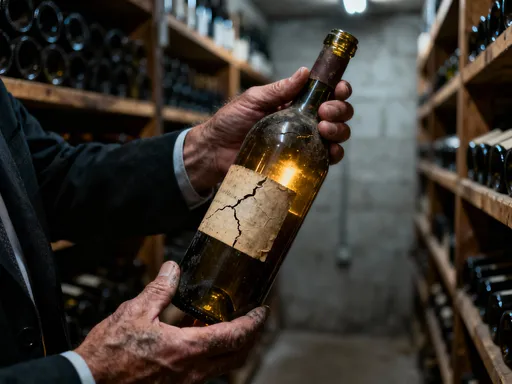
If the wine itself is the asset, its provenance is the title deed. Without a clear, unbroken chain of ownership and proper storage history, even the rarest bottle can become worthless. Provenance refers to the documented journey of a wine—from the château or winery to the current owner—including where it was stored, how it was transported, and who has handled it. In the world of fine wine, this documentation is not a formality; it’s the primary defense against fraud, damage, and depreciation.
Consider this: a bottle of 1982 Pétrus stored in a temperature-controlled professional facility for 40 years could be worth over $20,000. The same bottle, kept in a home basement with fluctuating temperatures and exposure to light, might be worth less than $2,000—if it’s drinkable at all. Heat and light accelerate oxidation, turning vibrant reds into flat, vinegar-like liquids. Vibration from appliances or frequent movement can disturb sediment and degrade texture. Even minor fluctuations in humidity can cause corks to dry out, leading to seepage and spoilage. These conditions don’t just affect taste—they destroy value.
Fraud is another major concern. The wine market has seen high-profile cases of counterfeit bottles, most notably the Rudy Kurniawan scandal, in which millions of dollars’ worth of fake wines were sold to collectors before being exposed. Without verifiable provenance—original receipts, storage records, auction histories—buyers have no way to confirm authenticity. Reputable auction houses and dealers now require extensive documentation, but private sales often lack such rigor. This is why buying from trusted sources is non-negotiable. A lower price from an unknown seller is never worth the risk.
Investors must insist on full transparency. When purchasing wine, always ask for provenance records. Look for wines stored in bonded warehouses or professional facilities with climate control and security. Some platforms now offer blockchain-based tracking to verify authenticity and storage history, adding an extra layer of trust. The bottom line: if you can’t prove where a bottle has been, you can’t prove what it’s worth. Provenance isn’t just a detail—it’s the foundation of confidence in wine investing. Without it, you’re not investing. You’re gambling.
Diversification Beyond the Bottle: Why Wine Shouldn’t Be Your Only Play
Wine can be a compelling addition to a portfolio, but it should never dominate it. Like any alternative asset, it carries unique risks—illiquidity, price volatility, and high transaction costs—that make it unsuitable as a primary investment. Financial advisors often recommend allocating no more than 5% to 10% of a portfolio to alternatives, with wine falling into that category for most investors. This limit ensures that passion doesn’t override prudence and that the rest of the portfolio remains balanced, diversified, and resilient.
When compared to traditional assets, wine behaves differently. Stocks and bonds offer regular income, liquidity, and transparency. You can sell shares within seconds, reinvest dividends, and track performance in real time. Wine, by contrast, may take months or even years to sell, with no guaranteed return. Auctions can take six to twelve weeks to settle, and private sales require negotiation and verification. There are no dividends—only potential capital gains, which are uncertain and long-term. This lack of income and liquidity means wine should complement, not replace, core investments.
Historical performance shows that wine can deliver strong returns over time, but with significant variability. The Liv-ex Fine Wine 1000 Index, which tracks the global fine wine market, has delivered an average annual return of around 5% over the past two decades—competitive with bonds but below long-term stock market averages. However, this return comes with higher volatility and longer holding periods. Unlike the S&P 500, which compounds steadily, wine prices move in cycles influenced by fashion, economic conditions, and collector trends. For example, during the 2008 financial crisis, fine wine held up better than equities, but in the early 2010s, it underperformed as markets recovered.
The key is integration. A well-structured portfolio might include a mix of equities, fixed income, real estate, and a small allocation to alternatives like wine, art, or collectibles. Each asset serves a purpose: stocks for growth, bonds for stability, real estate for diversification, and wine for both passion and potential appreciation. But the allocation must reflect the investor’s risk tolerance, time horizon, and financial goals. A young professional building wealth should prioritize liquid, growth-oriented assets. A retiree with stable income might use wine as a hedge against inflation or a legacy asset. The point is not to chase returns but to enhance balance. Wine should be the spice in the stew, not the main ingredient.
Storage and Logistics: The Silent Killers of Returns
Even the most carefully selected wines can lose value if not stored properly. Temperature, humidity, light, and movement—all seemingly minor factors—can have a devastating impact over time. A bottle that appreciates in theory may depreciate in practice if exposed to poor conditions. This is why storage is not a logistical afterthought; it’s a core component of the investment strategy. Many investors overlook this, assuming that a cool closet or basement is sufficient. In reality, only professionally managed storage can guarantee the environmental stability wine requires.
Ideal storage conditions are precise: a constant temperature of 55°F (13°C), humidity levels between 60% and 70%, complete darkness, and minimal vibration. Deviations from these standards can accelerate aging or cause spoilage. For example, temperatures above 70°F speed up chemical reactions in the wine, leading to premature oxidation. Below 50°F, the aging process slows too much, potentially stalling development. Fluctuations are even more dangerous—expanding and contracting corks allow air to seep in, compromising the seal. Humidity below 50% dries corks; above 80%, it promotes mold. Light, especially UV, degrades organic compounds in wine, while vibration disturbs sediment and disrupts molecular structure.
Professional wine storage facilities address these risks with climate-controlled vaults, security systems, and insurance coverage. These services are not cheap—annual fees can range from $100 to $500 per case depending on location and provider—but they are essential for preserving value. Some investors opt for home cellars, but unless they are properly built with insulation, cooling systems, and monitoring, they often fall short. A 2020 survey by Wine Owners found that nearly 40% of home-stored collections showed signs of damage due to temperature swings or poor humidity control.
Insurance is another critical consideration. Fine wine is a high-value, fragile asset vulnerable to theft, fire, and natural disasters. Standard homeowner’s policies often exclude wine or cap coverage at low amounts. Specialized wine insurance, available through providers like Chubb or Mutual of Omaha, offers tailored protection with agreed-value policies that reflect market prices. Without it, a single incident could erase years of appreciation. The message is clear: if you’re not storing and insuring your wine properly, you’re not investing. You’re collecting—expensively.
Timing the Market: When to Buy, Hold, and Sell—Without Getting Burned
Wine is not a get-rich-quick scheme. Unlike stocks, which can be bought and sold daily, wine investing requires patience and strategic timing. The secondary market moves slowly, with price changes unfolding over years rather than months. Successful investors don’t try to time every fluctuation; they focus on long-term trends, entry points, and exit readiness. Understanding the rhythm of the wine market—when to buy, when to hold, and when to sell—is essential for avoiding costly mistakes.
Buying at the right time can significantly impact returns. En primeur, or futures, allow investors to purchase wine before it’s bottled, often at a discount to future market value. This is common in Bordeaux, where top châteaux release new vintages for pre-sale. When done selectively—focusing on strong vintages from top producers—en primeur can offer attractive entry points. However, it’s not without risk. The wine hasn’t been tasted, and market conditions may change before release. Many investors who bought en primeur in 2010 and 2015 saw strong returns, while those who bought after the 2017 vintage faced a cooling market.
Holding periods matter. Most fine wines need 10 to 15 years to reach peak value, though some, like top Burgundies, may take longer. Selling too early means leaving money on the table; selling too late risks missing the peak. Monitoring market indicators—such as auction results, price trends on Liv-ex, and collector demand—helps determine optimal timing. For example, when a vintage becomes rare due to high consumption or low remaining stock, prices often rise. Conversely, when new vintages from a region gain attention, older ones may lose momentum.
Exiting requires planning. Auctions offer the widest reach but come with buyer’s and seller’s premiums totaling 20% or more. Private sales to dealers or collectors can be faster and cheaper but may yield lower prices. Direct peer-to-peer platforms are emerging, but liquidity varies. The key is to start the exit process early, allow time for authentication and shipping, and avoid emotional decisions. Selling should be based on strategy, not urgency. A disciplined approach—buying with provenance, holding with care, and selling with patience—turns wine from a speculative hobby into a credible investment.
Building a Smart Strategy: Practical Steps to Invest with Confidence
Investing in wine doesn’t have to be risky—if you approach it with discipline. The journey begins with education. Learn about regions, producers, vintages, and market trends. Use reliable sources: auction records, price indices, and expert reviews. Avoid relying on hype or personal preference. Instead, build a watchlist of wines with strong fundamentals—consistent demand, high scores, and limited supply.
Start small. Begin with a modest allocation, perhaps one or two cases from a top producer in a highly rated vintage. Buy from reputable sources that provide full provenance and storage history. Use professional storage from day one, even if it feels like an added cost. Insure your collection against loss or damage. These steps may seem excessive at first, but they form the foundation of long-term success.
Monitor your holdings. Track price movements through platforms like Wine-Searcher or Liv-ex. Stay informed about market shifts, new vintages, and changes in collector behavior. Reassess your portfolio annually, just as you would with stocks or bonds. Consider rebalancing—selling appreciated lots to lock in gains and reinvesting in undervalued opportunities.
Finally, keep perspective. Wine investing should enhance your financial life, not dominate it. It’s not about owning the rarest bottle or filling a cellar for show. It’s about making thoughtful choices that align with your goals. When managed wisely, wine can offer diversification, inflation protection, and even emotional satisfaction. But the real reward isn’t in the bottle—it’s in the confidence that comes from knowing you’ve built something of lasting value.