How I Found My Balance: Yoga Meditation Meets TCM for Faster Recovery
After months of feeling drained and stiff from injury rehab, I stumbled upon a game-changer—blending yoga meditation with traditional Chinese medicine principles. It wasn’t magic, but the shift was real. My pain eased, sleep improved, and energy slowly returned. This isn’t about instant fixes, but steady, natural progress. If you're healing and need gentle yet effective support, this journey might resonate with you. What began as a quiet experiment—just 10 minutes a day of mindful movement and breath—grew into a cornerstone of my recovery. It taught me that healing is not only about tissue repair, but about restoring harmony between body, breath, and inner awareness. This approach did not replace medical treatment, but it created space for deeper healing to unfold.
The Breaking Point: When Recovery Felt Impossible
For nearly eight months, I navigated a frustrating path of physical therapy appointments, prescribed exercises, and limited progress. A fall on icy pavement had left me with a strained lower back and hip misalignment, and though imaging showed no fractures, the discomfort lingered. Simple acts—bending to tie a shoe, standing in the kitchen, or sitting through a family dinner—became reminders of what my body could no longer do with ease. I followed every recommendation: strengthening exercises, ice and heat therapy, and even tried over-the-counter anti-inflammatories. Yet, improvement was minimal, and the emotional toll began to outweigh the physical.
What I hadn’t anticipated was the mental fatigue that came with chronic discomfort. The inability to move freely led to a quiet sense of isolation. I stopped joining friends for walks, avoided long car rides, and found myself canceling plans. The more I focused on recovery, the more it felt like I was failing at it. Sleep became erratic—either too light or too restless—and I noticed how stress amplified my pain. It was as if my body and mind were out of sync, each pulling in a different direction. Conventional rehabilitation addressed the muscles and joints, but it didn’t speak to the fatigue, the low mood, or the sense of stagnation that had settled in.
This disconnect was my turning point. I began to wonder: could healing require more than physical correction? Was it possible that my body needed not just movement, but a deeper form of restoration—one that included emotional balance and energetic flow? That question led me to explore practices beyond the clinic, ones that honored the whole person, not just the injured part.
Discovering the Missing Link: Mind-Body Harmony
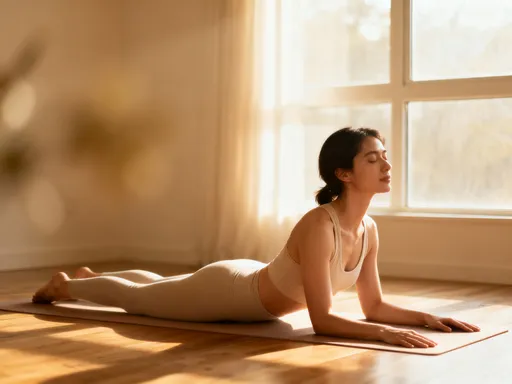
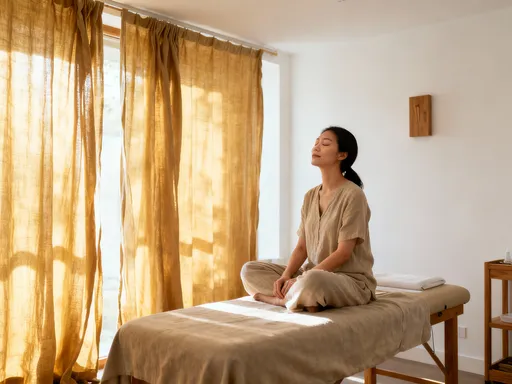
My first real encounter with yoga meditation came during a quiet afternoon when a friend shared a short online session designed for gentle movement. Skeptical but willing, I unrolled a mat and followed along. The session was slow—focusing on breath, small movements, and awareness. I didn’t expect much, but by the end, something had shifted. My breathing felt deeper, my shoulders had relaxed, and for the first time in weeks, my lower back didn’t feel like it was bracing for pain. It wasn’t a cure, but it was relief—a subtle but undeniable softening.
That experience opened a door. I began reading about how yoga supports not just flexibility, but nervous system regulation. I learned that mindful movement could activate the parasympathetic system—the body’s natural state of rest and repair. This resonated deeply. My injury recovery had been dominated by effort: pushing through pain, meeting therapy goals, trying to “get back to normal.” But perhaps what my body needed most wasn’t more effort, but permission to rest, to reset, and to reconnect.
As I explored further, I encountered the principles of traditional Chinese medicine (TCM), a system of healing rooted in balance and energy flow. Unlike Western medicine, which often isolates symptoms, TCM views the body as an interconnected network of energy pathways called meridians. The concept of Qi—the vital life force that flows through these channels—offered a new lens. I began to understand that pain or stiffness might not only stem from tissue damage, but from blocked or imbalanced Qi. Emotional stress, poor sleep, and physical strain could all disrupt this flow. Suddenly, my fatigue and discomfort made more sense. My body wasn’t just healing from a fall—it was carrying the weight of disrupted energy and unresolved stress.
Why This Blend Actually Works: Science Meets Tradition
The integration of yoga meditation and TCM is not a trendy fusion, but a convergence of complementary wisdom. Modern research supports what ancient practices have long claimed: the body heals best when physical, mental, and energetic systems are aligned. Yoga, particularly gentle and restorative forms, improves circulation, enhances joint mobility, and reduces muscle tension. More importantly, it influences the autonomic nervous system. Studies have shown that slow, mindful breathing and controlled movement can lower cortisol levels, reduce inflammation, and support tissue regeneration—key components in any recovery process.
From a TCM perspective, healing involves restoring the smooth flow of Qi and balancing Yin and Yang energies. When Qi becomes stagnant—often due to injury, emotional stress, or inactivity—discomfort arises. Practices like mindful breathing, acupressure, and meditative movement are designed to unblock these pathways. For example, deep diaphragmatic breathing not only calms the mind but is believed in TCM to strengthen the Spleen and Lung meridians, which govern energy and immunity. Similarly, gentle stretching can stimulate circulation along meridians, helping to release stagnation.
The synergy between these two systems lies in their shared focus on awareness and regulation. Yoga teaches you to listen to your body—to notice tension, to breathe into discomfort, to move with intention. TCM adds a layer of energetic awareness—inviting you to sense where energy feels heavy, blocked, or absent. Together, they create a feedback loop: physical movement influences energy flow, and improved energy flow enhances physical healing. This dual approach doesn’t replace medical treatment, but it amplifies its effectiveness by creating internal conditions that support recovery.
Simple Moves That Made a Difference: My Daily 15-Minute Routine
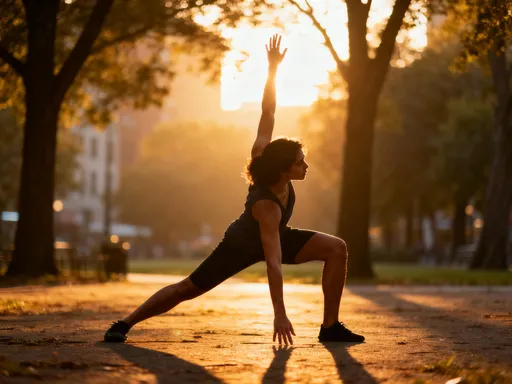
One of the most empowering aspects of this journey was discovering that healing didn’t require hours of effort. I built a simple 15-minute daily routine that combined gentle yoga poses with breathwork and TCM-inspired visualization. The key was consistency, not intensity. I focused on movements that felt supportive, never forced. Over time, this short practice became non-negotiable—a daily act of self-care that honored my body’s limits while gently encouraging progress.
The first pose I incorporated was Cat-Cow, a gentle spinal movement that warms up the back and encourages fluid motion. On hands and knees, I moved slowly between arching the spine (Cow) and rounding it (Cat), synchronizing each motion with my breath. Inhale into Cow, exhale into Cat. I imagined each breath sending nourishing Qi along my spine, especially through the Governing Vessel meridian, which runs from the tailbone up the back. This visualization wasn’t mystical—it helped me stay present and deepen my focus. Even on days when my back felt tight, this movement created subtle release.
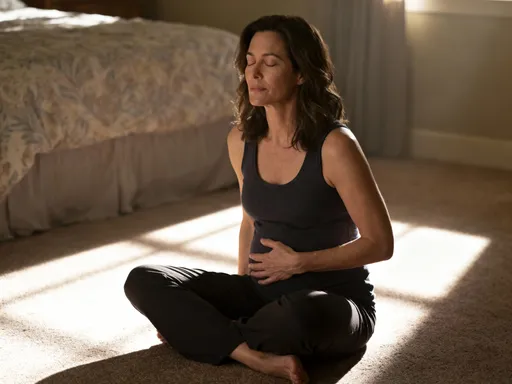
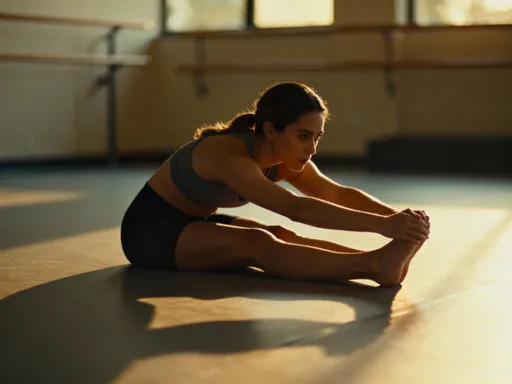
Next, I moved into Seated Forward Bend, modified with a cushion under my hips and a strap around my feet. This pose gently stretched my lower back and hamstrings without strain. As I folded forward, I focused on lengthening the spine rather than touching my toes. I paired this with a TCM breath technique: inhaling to gather energy at the lower abdomen (the Dan Tian, considered the body’s energy center), and exhaling to release tension down the Bladder meridian, which runs along the back. This helped me feel more grounded and less reactive to discomfort.
The final pose was Legs-Up-the-Wall, a restorative inversion that required minimal effort but delivered significant benefits. Lying on my back with legs extended vertically against a wall, I placed a folded blanket under my hips and closed my eyes. This pose improved circulation, reduced swelling in the legs, and activated the relaxation response. While holding it, I practiced a simple meditation: scanning my body from feet to head, noticing areas of tension, and imagining warm, healing energy flowing into them. This combination of physical support and mental focus became my anchor during recovery.
Tuning Into Energy: Meditation Practices Rooted in TCM
As my physical practice deepened, I became curious about more direct ways to influence my energy. I began exploring Qi-focused meditations, which taught me to tune into subtle sensations in my body. One of the first techniques I learned was body scanning, a practice where I mentally move attention through each part of the body, observing without judgment. I started at the toes and slowly moved upward, noticing warmth, coolness, tingling, or numbness. Over time, I began to detect patterns—areas where energy felt stuck, such as my lower back or shoulders. These weren’t always places of pain, but of heaviness or dullness, which TCM identifies as signs of Qi stagnation.
To support energy flow, I incorporated acupressure into my routine. I focused on a few key points known for promoting healing and relaxation. One was Yin Tang, the “third eye” point located between the eyebrows. Gently pressing this point with the index finger helped calm my mind and reduce mental chatter, especially before sleep. Another was Zusanli (ST36), found four finger-widths below the kneecap. This point is traditionally used to strengthen Qi, boost immunity, and support digestion. I massaged it for one minute on each leg before yoga sessions, imagining it as a switch to turn on my body’s vitality.
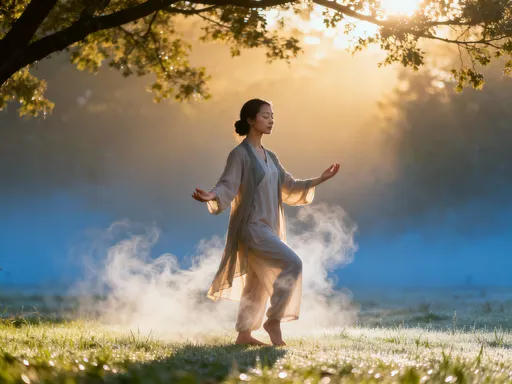
These practices shifted my understanding of stillness. Meditation was no longer just about relaxation—it became an active form of healing. By directing attention and breath to specific areas, I was engaging in what TCM calls “self-acupressure through awareness.” The stillness allowed my nervous system to reset, but it also gave me insight into my body’s needs. I learned to distinguish between pain that required rest and discomfort that could be softened with breath and movement. This awareness became one of the most valuable tools in my recovery.
What Changed After Six Weeks: Real Gains Without the Hype
After six weeks of consistent practice, the changes were measurable and meaningful. My joint mobility improved—I could bend forward with less resistance and walk longer without stiffness. Sleep quality shifted dramatically; I fell asleep faster and woke up feeling more refreshed. Most surprisingly, my emotional resilience strengthened. I felt less reactive to daily stressors and more patient with my healing process. The constant background hum of discomfort that had been present for months began to fade.
I also reduced my reliance on pain relief methods. While I still used heat therapy when needed, I no longer reached for over-the-counter medications as frequently. Instead, I turned to breathwork or a short yoga sequence when discomfort flared. This sense of self-regulation was empowering. I wasn’t avoiding pain—I was learning to respond to it with care, not fear. My physical therapist noticed the difference too, commenting on improved posture and reduced muscle guarding during sessions.
That said, not everything worked perfectly. Some days, my energy was too low for even 10 minutes of practice. Other times, I pushed too hard and paid for it the next day. I learned to adjust—sometimes shortening the routine, other times skipping it altogether without guilt. I also realized that certain visualizations didn’t resonate with me, so I simplified them. The goal wasn’t perfection, but presence. What mattered was showing up for myself, even in small ways, and trusting that consistency would bring change.
Making It Your Own: A Sustainable Path to Whole-Body Healing
One of the greatest lessons from this journey is that healing is deeply personal. What worked for me may need to be adapted for someone else. The beauty of combining yoga meditation with TCM principles is their flexibility. Whether recovering from surgery, managing chronic pain, or navigating postpartum healing, these practices can be tailored to different stages and conditions. The key is to listen—to your body, your energy, and your limits.
If you’re considering this approach, start small. Even five minutes of mindful breathing or a single gentle stretch can make a difference. Focus on quality, not quantity. Pay attention to how your body responds. If a pose causes sharp pain, stop. If a meditation feels overwhelming, shorten it. You are not training for a competition—you are nurturing recovery. Consider using props like cushions, straps, or blankets to support your body and make movements more accessible.
It’s also essential to work alongside healthcare providers. These practices are complementary, not replacements for medical care. Discuss your intentions with your doctor or physical therapist, especially if you have specific conditions like osteoporosis, joint instability, or cardiovascular concerns. They can help you modify poses or suggest safe entry points. Remember, integrating mind-body practices isn’t about adding another task to your to-do list—it’s about creating space for healing to happen naturally.
Finally, embrace patience. True rehabilitation is not a race. There will be days of progress and days of setback. What matters is the overall direction. By honoring your body’s rhythm and supporting it with gentle, intentional practices, you create the conditions for lasting recovery. Healing is not just the absence of pain—it’s the presence of balance, energy, and peace.
Healing isn’t just about fixing what’s broken—it’s about creating the right conditions for the body and mind to thrive together. By merging yoga meditation with traditional Chinese medicine insights, I found a gentler, more connected way forward. This approach won’t replace medical care, but it can powerfully support it. If you're in recovery, consider this: sometimes the quietest practices create the loudest shifts.