How I Reinvented My Heart Health Journey: A Science-Backed Rehab Story
Heart health isn’t just about avoiding disease—it’s about rebuilding strength, energy, and trust in your body. After facing early cardiovascular warnings, I dove into cardiac rehabilitation not as a patient, but as someone determined to understand the science behind recovery. What I discovered transformed not only my heart function but my entire lifestyle. This is a real look at how evidence-based rehab strategies, when applied consistently, can lead to meaningful, measurable improvements—no hype, just results.
The Wake-Up Call: Recognizing Cardiovascular Risk
It started with fatigue—something many women in their 40s brush off as stress or busy schedules. But when climbing a single flight of stairs left me gasping for breath and my resting heart rate remained unusually high, I knew something was different. Occasional chest tightness after meals and consistently elevated blood pressure readings during routine checkups added to my concern. At first, I dismissed it as hormonal changes or lack of sleep. But denial only delayed answers, and answers were exactly what I needed.
A visit to my primary care physician led to a referral for a full cardiovascular assessment. Tests revealed early signs of left ventricular dysfunction and arterial stiffness—conditions often linked to long-term hypertension and sedentary lifestyle. An echocardiogram showed mild hypertrophy, meaning the heart muscle had thickened in response to increased workload. These weren’t life-threatening diagnoses, but they were clear warning signals. My doctor explained that without intervention, the risk of more serious events like heart attack or heart failure could rise significantly over time. The results weren’t a death sentence, but they were a wake-up call: my heart was asking for help.
The emotional impact was profound. I had always considered myself reasonably healthy—eating balanced meals, avoiding smoking, and managing stress as best I could. Yet here I was, facing the reality that my habits weren’t enough. There was frustration, yes, but also relief. Relief because I finally had clarity. And with clarity came agency. I made a quiet but firm decision: I would not ignore this. I would commit to cardiac rehabilitation not as a last resort, but as a proactive step toward reclaiming my vitality.
What I’ve learned since is that many people—especially women—overlook early cardiovascular symptoms because they don’t fit the stereotype of a “heart attack.” We think of crushing chest pain and sudden collapse, but in reality, the signs are often subtle: persistent tiredness, unexplained shortness of breath, swelling in the legs, or irregular heartbeat. Ignoring these cues can allow silent damage to progress. The truth is, early detection and timely action are among the most powerful tools we have. My journey began not with a crisis, but with attention—and that made all the difference.
Understanding the Heart as a Muscle: The Science Behind Recovery
One of the most empowering realizations during rehab was understanding that the heart, like any other muscle, responds to training. When injured or overworked, it undergoes structural and functional changes—a process known as cardiac remodeling. In some cases, this remodeling is harmful, such as when high blood pressure causes the left ventricle to thicken and become less efficient. But the remarkable part is that the heart also has the capacity to reverse these changes through targeted, progressive conditioning.
After cardiovascular stress or minor injury, neurohormonal systems like the sympathetic nervous system and the renin-angiotensin-aldosterone system become overactive. This increases heart rate, blood pressure, and fluid retention—all of which place additional strain on the heart over time. The goal of rehabilitation is not just to reduce physical load but to recalibrate these internal systems. Structured exercise helps restore balance by improving vagal tone, which enhances parasympathetic control and lowers resting heart rate. This shift supports better heart rate variability, a key marker of cardiovascular resilience.
Inflammation and endothelial function also play critical roles in recovery. Chronic low-grade inflammation contributes to arterial stiffness and plaque formation. Meanwhile, the endothelium—the inner lining of blood vessels—regulates blood flow, clotting, and immune response. When impaired, it reduces the vessels’ ability to dilate properly. Exercise, particularly aerobic activity, has been shown to improve endothelial function by increasing nitric oxide production, which promotes vasodilation and lowers blood pressure. These changes don’t happen overnight, but they are measurable and meaningful.
This is why random or sporadic exercise often falls short. Without proper progression, monitoring, and consistency, physical activity may not trigger the desired adaptations—and in some cases, it can even be risky. Cardiac rehab provides a science-guided framework that ensures the heart is challenged safely and effectively. It’s not about pushing harder; it’s about working smarter. By aligning exercise intensity with physiological response, rehab programs create the ideal conditions for healing and strengthening at the cellular level.
Phase One: Medical Supervision and Early Mobilization
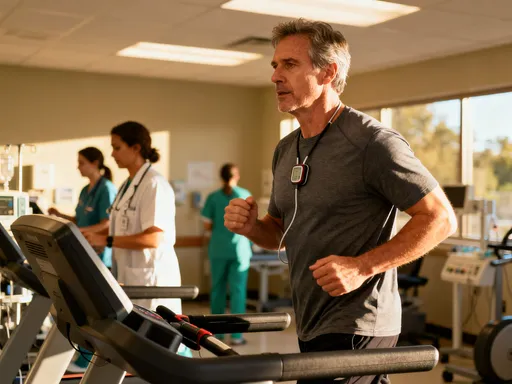
The first phase of cardiac rehabilitation is rooted in safety and observation. For someone newly diagnosed or recovering from a cardiac event, even mild activity can feel intimidating. That’s why this stage takes place under clinical supervision, typically in a hospital or outpatient center equipped with emergency resources. Electrocardiogram (ECG) monitoring, blood pressure tracking, and continuous symptom assessment ensure that every movement is both safe and informative.
My early sessions began with simple walking on a treadmill at a very low intensity—just 1.5 to 2 miles per hour, for 10 to 15 minutes. Though it seemed minimal, the physiological feedback was revealing. Nurses monitored my heart rhythm for arrhythmias, watched for ST-segment changes that might indicate ischemia, and recorded how quickly my heart rate rose and recovered. Even small increases in exertion provided data about my heart’s efficiency and tolerance. Over time, this allowed my rehab team to tailor a plan specific to my needs.
Cycling on a stationary bike was introduced shortly after, offering a low-impact alternative that still engaged major muscle groups. The resistance was kept extremely light, and duration was gradually increased by a few minutes each session. The goal wasn’t to burn calories or sweat heavily, but to stimulate circulation, improve oxygen delivery, and begin retraining the cardiovascular system. These gentle activities helped reduce blood pooling, prevent deconditioning, and boost confidence.
Pacing was emphasized above all else. Overexertion in early recovery can trigger adverse events or setbacks, so learning to listen to the body was essential. We used the Borg Rating of Perceived Exertion (RPE) scale, aiming to stay between 11 and 13—“light” to “somewhat hard.” If breathing became labored, chest discomfort arose, or dizziness occurred, we stopped immediately. This cautious approach built trust—not just in the process, but in my own body’s signals. By the end of phase one, I could walk 20 minutes continuously without symptoms, a small victory that laid the foundation for everything that followed.
Phase Two: Building Endurance with Targeted Exercise
As my cardiovascular stability improved, the program shifted toward building endurance. This second phase focused on moderate-intensity aerobic exercise, carefully calibrated to my functional capacity. The treadmill speed increased to 3 to 3.5 mph, and incline was added in small increments. Cycling sessions extended to 25–30 minutes, with gradual resistance increases. The goal was to elevate my heart rate into a target training zone—typically 60% to 75% of my maximum predicted heart rate—while staying within safe limits.
Heart rate zones became a central guide. Using a wearable monitor, I could see real-time feedback and adjust effort accordingly. Staying in zone allowed me to train long enough to stimulate adaptation without triggering strain. Over several weeks, I noticed that the same workload felt easier. My heart rate climbed more slowly, recovered faster, and my breathing became more efficient. These weren’t just subjective feelings—they were signs of improved stroke volume and cardiac output, meaning my heart was pumping more blood with each beat.
Resistance training was introduced during this phase, starting with light hand weights and resistance bands. Exercises like seated rows, chest presses, and leg extensions were performed in controlled sets of 10–12 repetitions. Strength training isn’t just for muscles; it enhances vascular function by improving blood flow regulation and reducing arterial stiffness. It also increases lean muscle mass, which boosts resting metabolism and supports better glucose control—important factors in long-term heart health.
Consistency was key. Research shows that measurable improvements in aerobic capacity begin to appear after about four to six weeks of regular training. By week eight, my VO₂ max—the gold standard for measuring cardiovascular fitness—had increased by 12%. That may sound modest, but in clinical terms, a 10% rise in VO₂ max is associated with a 20% reduction in cardiovascular mortality. These gains weren’t due to extreme effort, but to steady, guided progression. The message was clear: small, sustained actions create lasting change.
Beyond the Treadmill: Lifestyle as Medicine
Exercise was only one piece of the puzzle. The rehab program placed equal emphasis on nutrition, sleep, and stress management—what many experts now call the pillars of lifestyle medicine. I learned that food isn’t just fuel; it’s information that directly influences inflammation, cholesterol levels, and blood vessel health. A diet rich in whole grains, leafy greens, fatty fish, nuts, and legumes helped reduce arterial stiffness and improve lipid profiles. Reducing sodium intake lowered my blood pressure, while increasing fiber intake supported healthier digestion and weight management.
Sleep emerged as another critical factor. Poor or fragmented sleep disrupts autonomic balance, increases cortisol levels, and elevates heart rate and blood pressure overnight. During rehab, I began tracking my sleep patterns and made simple changes: setting a consistent bedtime, reducing screen time before bed, and creating a cool, dark sleeping environment. Within weeks, I noticed deeper rest and improved daytime energy. Studies show that adults who get 7–8 hours of quality sleep per night have better heart rate variability and lower risk of hypertension—evidence that rest is not passive, but actively restorative.
Stress management was equally important. Chronic psychological stress activates the same neurohormonal pathways that strain the heart. Mindfulness practices, including diaphragmatic breathing and guided meditation, became part of my daily routine. I practiced slow, deep breathing for five minutes each morning and evening, which helped activate the parasympathetic nervous system and lower resting heart rate. Over time, these techniques reduced my anxiety and improved emotional resilience. The rehab team also encouraged routine—waking, eating, exercising, and sleeping at consistent times—as a way to stabilize circadian rhythms and support long-term health.
What surprised me most was how small habits compounded. Drinking more water, walking after meals, taking short stretching breaks during the day—none of these required major effort, but together, they created a protective effect. Heart health, I realized, isn’t built in a single workout or perfect meal. It’s built in the quiet moments of daily choice, repeated over time.
Tracking Progress: Metrics That Matter
One of the most motivating aspects of rehab was seeing progress in tangible ways. Each session included assessments that tracked both objective and subjective improvements. VO₂ max, resting heart rate, blood pressure, and exercise duration were recorded regularly. Over 12 weeks, my resting heart rate dropped from 82 to 68 beats per minute—a sign of improved cardiac efficiency. Systolic blood pressure decreased from 146 to 128 mmHg, reducing strain on the arteries. These numbers weren’t just statistics; they were proof that my efforts were working.
Patient-reported outcomes were also tracked. I completed weekly questionnaires rating my energy levels, mood, sleep quality, and exercise tolerance. At the start, I rated my energy at 4 out of 10 and could only walk a block without stopping. By week 10, my energy level was consistently 8 or 9, and I completed a full mile walk without discomfort. These subjective gains were just as important as the clinical data—they reflected real-life improvements in quality of life.
Wearable technology, such as a heart rate monitor and activity tracker, provided additional feedback. I used it to monitor daily step count, heart rate trends, and sleep duration. However, the rehab team emphasized not becoming overly reliant on devices. While data can guide decisions, it shouldn’t dictate emotions. There were days when my step count was low or my heart rate spiked unexpectedly—and that was okay. The goal was long-term patterns, not daily perfection.
Adjusting goals based on real data was part of the process. When progress plateaued, my therapist modified the exercise plan—adding interval training, increasing resistance, or changing timing. This data-informed approach ensured that the program remained effective and personalized. It also taught me to be patient and responsive, rather than rigid or discouraged. Progress isn’t always linear, but with the right tools, it’s always possible.
Staying the Course: From Rehab to Lifelong Prevention
After completing the 12-week supervised program, the next challenge was maintaining momentum. Transitioning from structured rehab to independent exercise required planning and intention. My care team helped me design a home-based routine that mirrored the clinic sessions but fit my daily life. I continued walking five days a week, doing resistance exercises twice weekly, and practicing breathing techniques daily. The structure remained, but the setting changed.
Sustainability was the priority. I chose activities I enjoyed—walking in nature, dancing to music at home, gardening—so that exercise felt less like a chore and more like a gift. I scheduled workouts at the same time each day to build habit strength. I also modified my environment: I kept walking shoes by the door, placed resistance bands in the living room, and posted a weekly calendar on the fridge. These small cues made it easier to stay consistent, even on busy days.
Social support played a vital role. I invited a close friend to join me for weekend walks, and we held each other accountable. Sharing progress, challenges, and small victories strengthened our bond and kept motivation high. I also joined a community wellness group where others shared similar goals. Being part of a supportive network reminded me that I wasn’t alone—and that collective encouragement can sustain individual effort.
Most importantly, I shifted my mindset. Heart health is no longer something I “fix” and forget. It’s an ongoing commitment—a daily practice of listening, responding, and choosing well. It’s not about perfection, but persistence. The habits I built during rehab have become part of who I am. And while I may never run a marathon, I can climb stairs without fear, play with my grandchildren without breathlessness, and wake up each day with a sense of strength and gratitude.
Cardiac rehabilitation is more than a recovery protocol—it’s a reeducation in how to live with greater awareness and intention. The journey isn’t about perfection, but persistence. By combining scientific principles with daily action, meaningful heart health improvements are not only possible but sustainable. The best investment you can make isn’t in pills or procedures, but in the consistent, informed choices that let your heart thrive.